By Gloria Jones
It seemed impossible to live this close to Vietnam and not visit. So with Da Nang just 1 hour and 40 minutes from Bangkok’s Don Mueang International Airport it was time to explore and report back. If you missed the article about Da Nang and the overnight train to Hanoi you can still read these articles at pattayatrader.com This month we explore Hanoi, the vibrant capital of Vietnam and a place I shall never forget.
First of all I have to warn you about the pollution in Hanoi. We didn’t suffer too badly as we were only there for 3 days but for over 10 million people who call Hanoi home, escaping pollution isn’t an option. A decade of rapid urbanisation and economic expansion has come at a cost. With over a million cars and 6 million motorbikes (many with outdated engines) Vietnam’s streets are a constant flow of traffic, emissions and hooting of horns. I have never been to a city where everyone uses their horn quite so much – not necessarily in an aggressive way but more of a “I’m coming through” way. It takes some getting used to and for me it just added to the fact that I found Hanoi an exciting,vibrant place but I can imagine that to live here you would find it all a bit much.
 There are places to escape the hustle and bustle such as Hanoi’s Old Quarter, the historic heart of the capital. With its narrow streets that stretch back over a thousand years and fascinating architecture,a blend of ancient Vietnamese and French Colonial, it’s like stepping into a living museum. Also there are several large,serene lakes where I saw locals practising their Tai Chi early in the mornings and plenty of shade with tree line streets for as President Ho Chi Minh himself said “While the enemy was savagely spraying Agent Orange to destroy the trees and forests in the South, in the North our people competed to plant trees and reforest… We plant trees for ourselves and for our fellow countrymen.” I know this because it was on the wall of the museum at the Ho Chi Minh Mausoleum, a must for anyone visiting Hanoi.
The Mausoleum is where the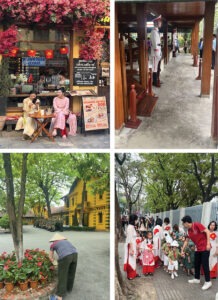 preserved body of President Ho Chi Minh rests in state. As you file past there are strict rules. For the millions of people who visit annually are asked to dress appropriately (no shorts or sleeveless tops), be silent and refrain from taking photos as you shuffle past in the slow moving queue. I found it extremely moving and it was evident that the Vietnamese people still have such deep reverence for the man they consider their founding leader – some were in tears as they passed by his body. Before going to the mausoleum you should check online as it is sometimes shut for refurbishment and even when open has limited opening hours (mornings only). Its also advisable to arrive as early as possible (7:30 or 8 a.m. depending on the month) as there can be very long queues.
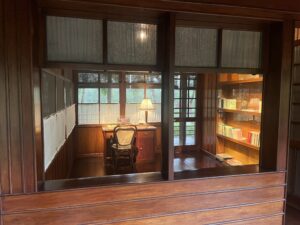
Whilst at the Mausoleum you can also visit a modest wooden stilt house that reflects the simple lifestyle of Ho Chi Minh, who chose to live here instead of the grand palace nearby.
Another important cultural and historical landmark is The Temple of Literature built in 1070 during the Ly Dynasty and featured on the back of Vietnam’s 100,000 đồng banknote. This historic site was dedicated to Confucius and later became Vietnam’s first national university. Today amongst the tourists walking through the series of courtyards you will see students who come here to pray for academic success and good fortune.
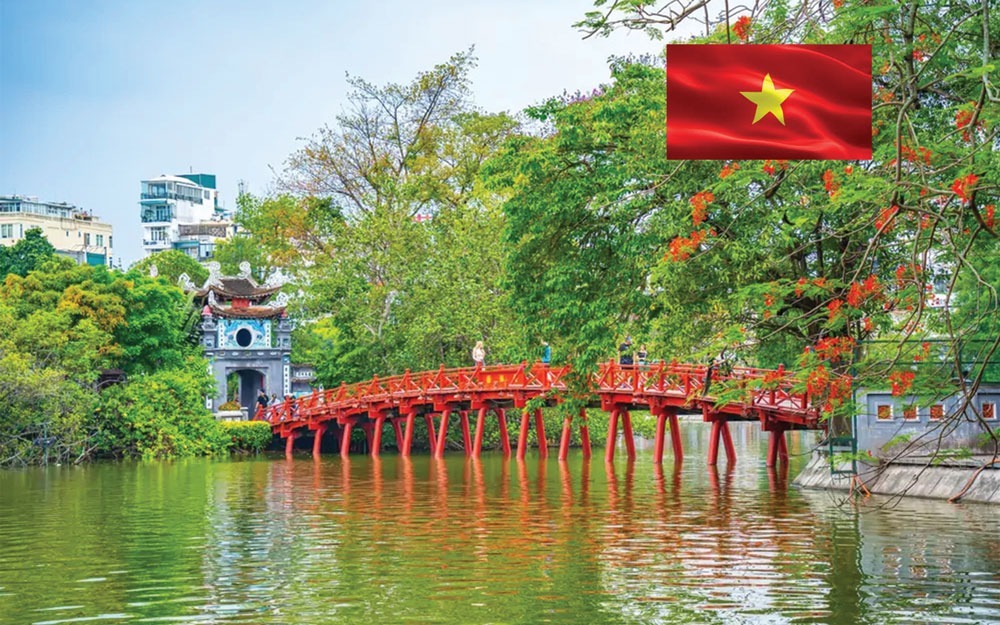
Also worth a visit is Ngọc Sơn Temple in the centre of Hoàn Kiếm Lake that you get to via a beautifully decorated, red bridge. Ngọc Sơn Temple is not only a place of worship but also a symbol of Vietnamese heritage and national pride. It is also where you will find several references to the Sword Lake Turtle, one of the Four Sacred Animals in Vietnamese culture and a symbol of longevity. It is an extremely rare species of turtle close to extinction with only a couple believed to be left and inside the temple there are two that have been preserved and displayed in glass cabinets. The name comes from a legend of a Golden Turtle who lent a magic sword to King L Loi helping him win the war against Ming invaders.
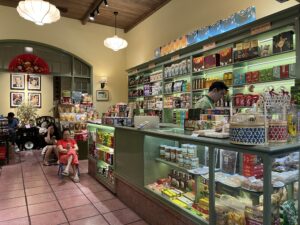 If all this culture is making you hungry you should treat yourself to some Vietnamese coffee: Egg, Salt or Coconut served cold or hot and all equally delicious. Along with a bánh mì, a popular street food sandwich. It blends Vietnamese and French culinary influences being a light, crispy baguette introduced during French colonial times with bold Vietnamese flavours.You can choose from
grilled pork, roasted chicken, or Vietnamese cold cuts with pickled carrot, sliced cucumber and chili
mayonnaise and soy or fish sauce. What makes bánh mì special is how it combines both wheat and rice flour to make a unique crusty bread. We enjoyed many during our time in Vietnam.
Another iconic Vietnamese dish to try is Phở a traditional noodle soup that can be eaten for breakfast, lunch, or dinner, made from broth that is slowly simmered for hours with beef bones (for phở bò) or chicken bones (for phở gà), plus spices like star anise, cinnamon, ginger, and cloves, giving it a rich, aromatic flavour. Flat, soft, white rice noodles that soak up the broth are then added along with thinly sliced beef or chicken, cilantro, bean sprouts; lime wedges; and chili slices.
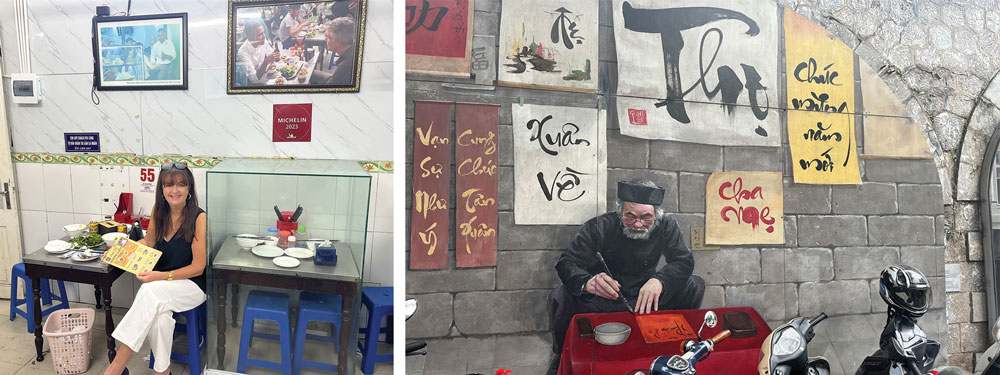
My favourite meal of all however, was Bún chả comprised of pork patties cooked over charcoal and served with accompanying soft white noodles fresh herbs and greens and a delicious dipping sauce: made from savory-sweet fish sauce broth with vinegar, sugar, garlic, and chili Made internationally famous by Anthony Bourdain who ate it with Barack Obama back in 2016 in the simple, no frills restaurant Hương Liên. They have even encased the actual table and utensils (washed of course) used by the two famous visitors – which I just had to have a photo opportunity moment by.