
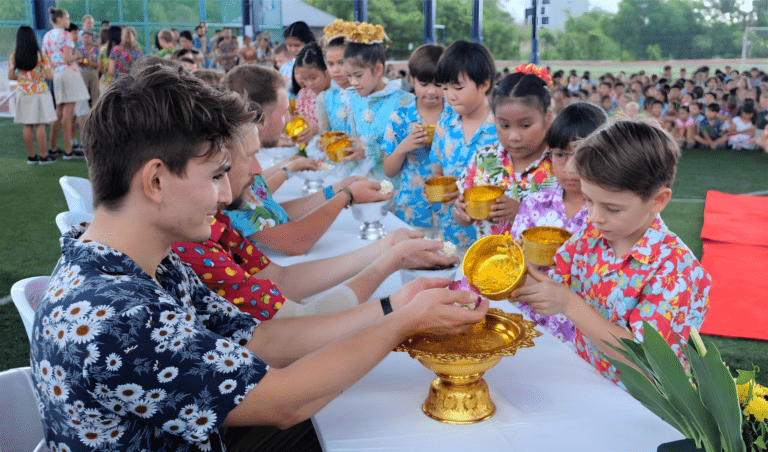
Every April, Thailand comes alive with one of the world’s most exuberant festivals. Songkran,the Thai New Year is when Pattaya streets transform into rivers – sometimes long before the official Songkran celebratory dates of 13th-15th April. It’s also a time when schools across the nation take an opportunity to step into the culture that surrounds the festival rather than just its water fight party aspect
Songkran takes its name from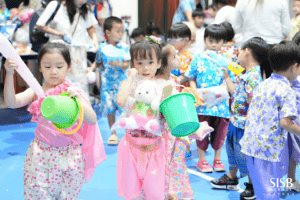 a Sanskrit word meaning “passage” or “move into.” Traditionally, marking the sun’s transition into Aries and the start of the lunar new year. Water:splashed, poured, or joyfully hurled is the festival’s defining symbol. It represents carrying away the misfortunes of the previous year and welcoming the new year clean and refreshed. At its heart, the most meaningful ritual of Songkran is the pouring of scented water over the hands of elders as a gesture of respect and blessing known as Rod Nam Dam Hua.Many schools have embraced this tradition warmly, inviting senior staff and Thai community members to receive the ceremony from students. It’s a moment of genuine connection that cuts across cultural backgrounds: the instinct to honour those who have guided you with the gentle pouring of water, and sharing of jasmine garlands that accompanies the ceremony. For expat children new to the country, this is frequently the moment Songkran shifts from spectacle to something understood and felt.
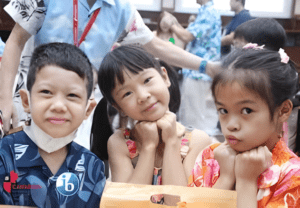 International school Songkran events have evolved into rich, full-day celebrations. A typical programme might open with a cultural assembly where students learn about the festival’s origins, followed by traditional dance performances and demonstrations of merit-making. Food stalls serving mango sticky rice, som tum, and grilled satay may line the courtyards, turning the campus into something resembling a village fair.The water festivities with buckets, super-soakers, and strategically placed hoses may arrive later once the ceremonial element has been given its proper space. Schools are thoughtful about sequencing: the soaking fun so that more students firstly understand what the water represents.
Some schools build “sand pagodas” in the Buddhist tradition, while others run craft workshops where students make the small ornamental floats used in Songkran processions.The festival aligns neatly with international education’s emphasis on intercultural learning, and many teachers build unit work around the festival in the weeks preceding it. Primary classes might explore the Buddhist calendar and the concept of new beginnings across different cultures. Secondary students examine how globalisation has changed Songkran, from a quiet family ceremony to a tourism phenomenon — raising questions about cultural preservation and commercial influence that are rich territory for discussion.
Thai language classes naturally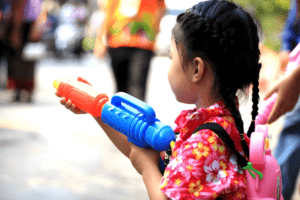 come into their own. Phrases like สวัสดีปีใหม่ (Happy New Year) and ขอให้โชคดี (good luck) become genuinely useful overnight. For students who have been grinding through vocabulary lists all term, hearing those same words shouted joyfully across a drenched schoolyard is its own kind of language lesson.The best Songkran celebrations extending beyond the school gate with the invitation to parents to help organise and lead activities.For newly arrived expat families, a school Songkran event is often their first real encounter with Thai festive culture in a context that feels welcoming rather than overwhelming. The school becomes a bridge, a place where the unfamiliar is introduced gently, with context and community around it. Years from now, the students who are now sitting in classrooms may remember very little about the week’s lesson plans but will remember being soaked to the skin, laughing in the April heat. Then in quieter moments also reflect on the morning hey poured water over an elder’s hands and wished them well. That combination of reverence and joy is Songkran’s gift.